A Wave of Glass in Roppongi
Kisho Kurokawa's National Art Center, Tokyo, wraps a vast exhibition hall in a rippling curtain wall.
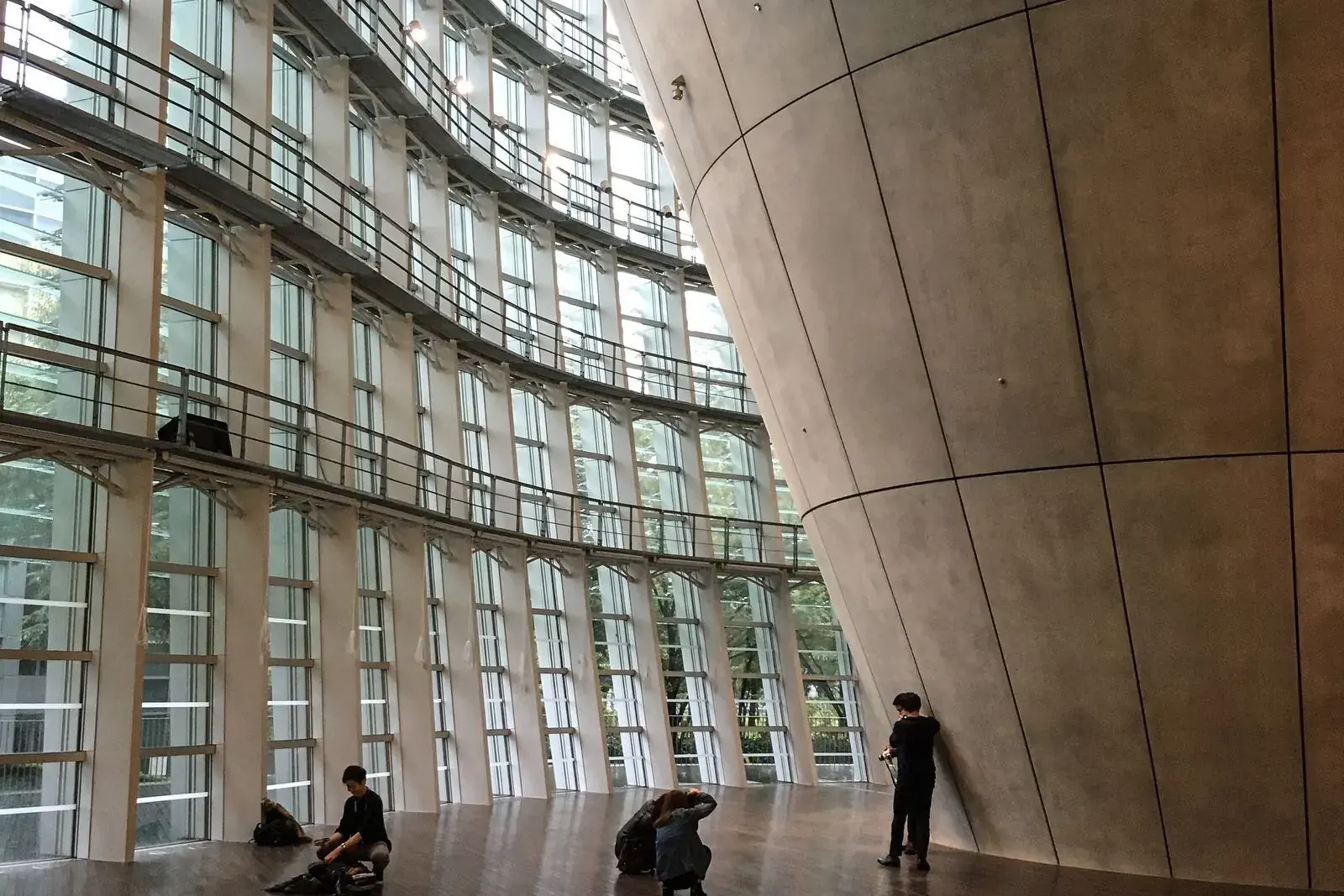
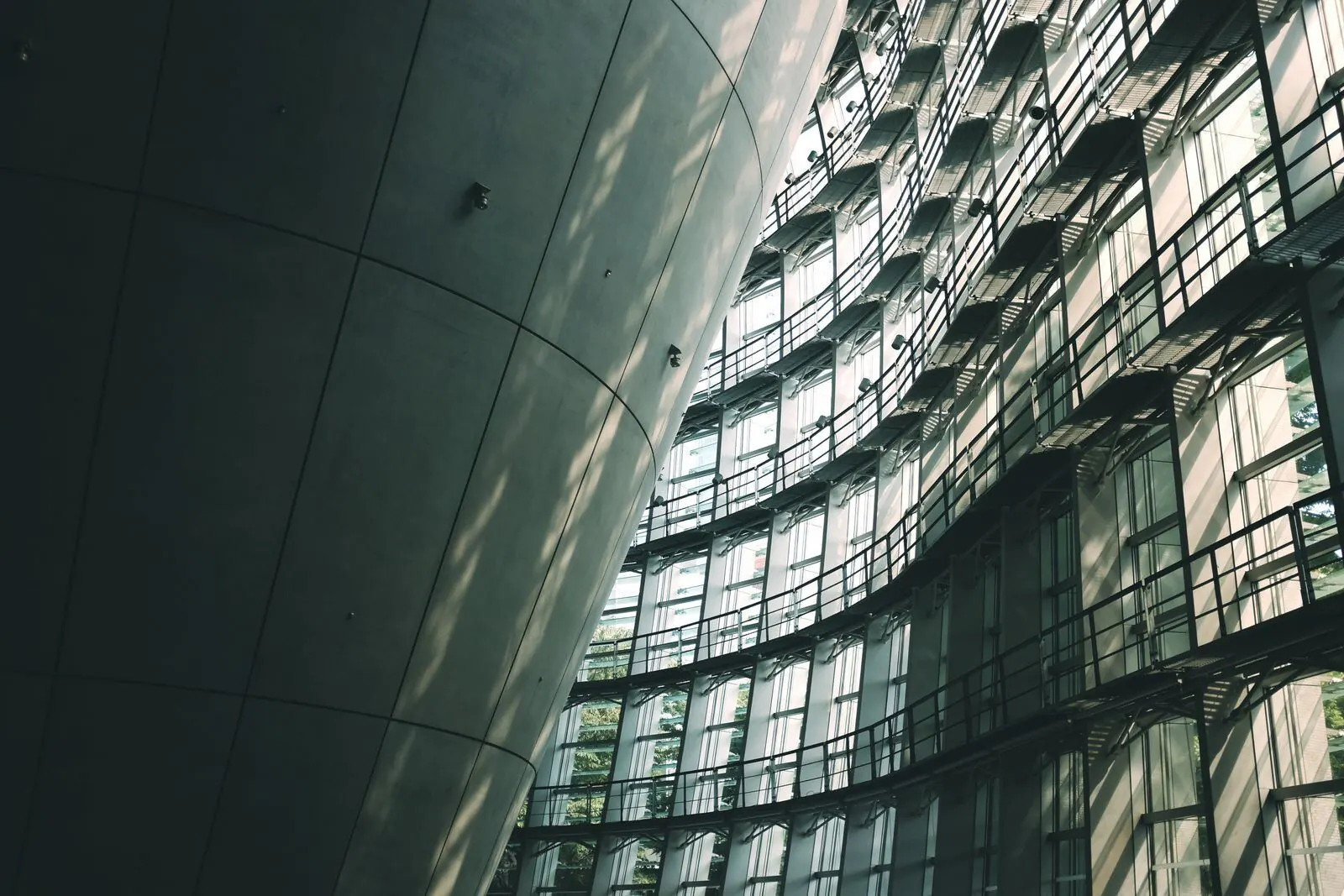
Walk toward the National Art Center, Tokyo, and you see a huge undulating wall of glass, rising and falling like a wave frozen in place. Behind it, two inverted concrete cones rise through the atrium, carrying restaurants and a café high above the lobby floor.
The building was designed by Kisho Kurokawa — one of the founders of the Metabolist movement — and opened in 2007, the year of his death. It is one of Japan's largest exhibition spaces, and unusually, it has no permanent collection: it hosts temporary exhibitions and shows organised by art associations.
A building for being in between
The glass façade wraps a tall, light-filled atrium that functions almost like an indoor public square. Visitors wait, meet, sit and wander there whether or not they enter an exhibition. Fine louvres in the glazing help to manage sunlight.
The galleries hold the art. The atrium holds the people.
Kurokawa often wrote about symbiosis — between nature and technology, past and future, inside and outside. In Roppongi, that idea becomes a space where the city and the museum overlap.
Tip
Even if no exhibition interests you, step inside on a sunny afternoon and watch the shadows of the façade travel across the floor and up the cones.