Fifteen Stones: How to Look at a Dry Garden
Kyoto's karesansui gardens use nothing but rock, gravel and moss. Here is how to read them without a guidebook.
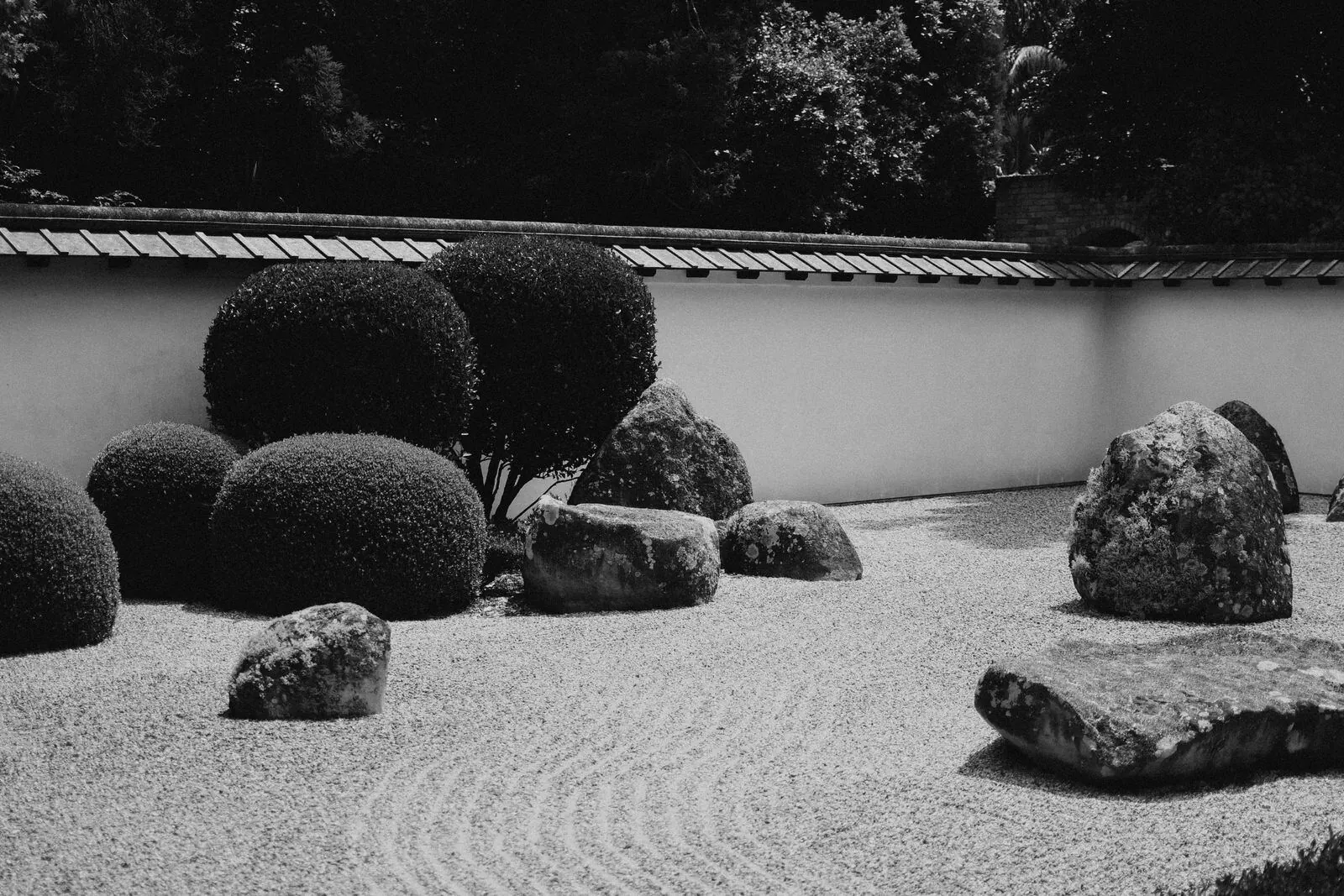
At Ryōan-ji in northwest Kyoto, visitors sit along a wooden veranda and look at a rectangle of white gravel containing fifteen stones arranged in small groups. That is all. There is no water, no flowers, no path to follow. And yet people sit there for a very long time.
Ryōan-ji's garden is the best-known karesansui, or dry landscape garden, a style closely associated with Zen Buddhist temples. Its date and designer are still debated, which only adds to its mystery. A frequently repeated observation is that from any one point on the veranda, at least one of the fifteen stones is always hidden from view.
Water without water
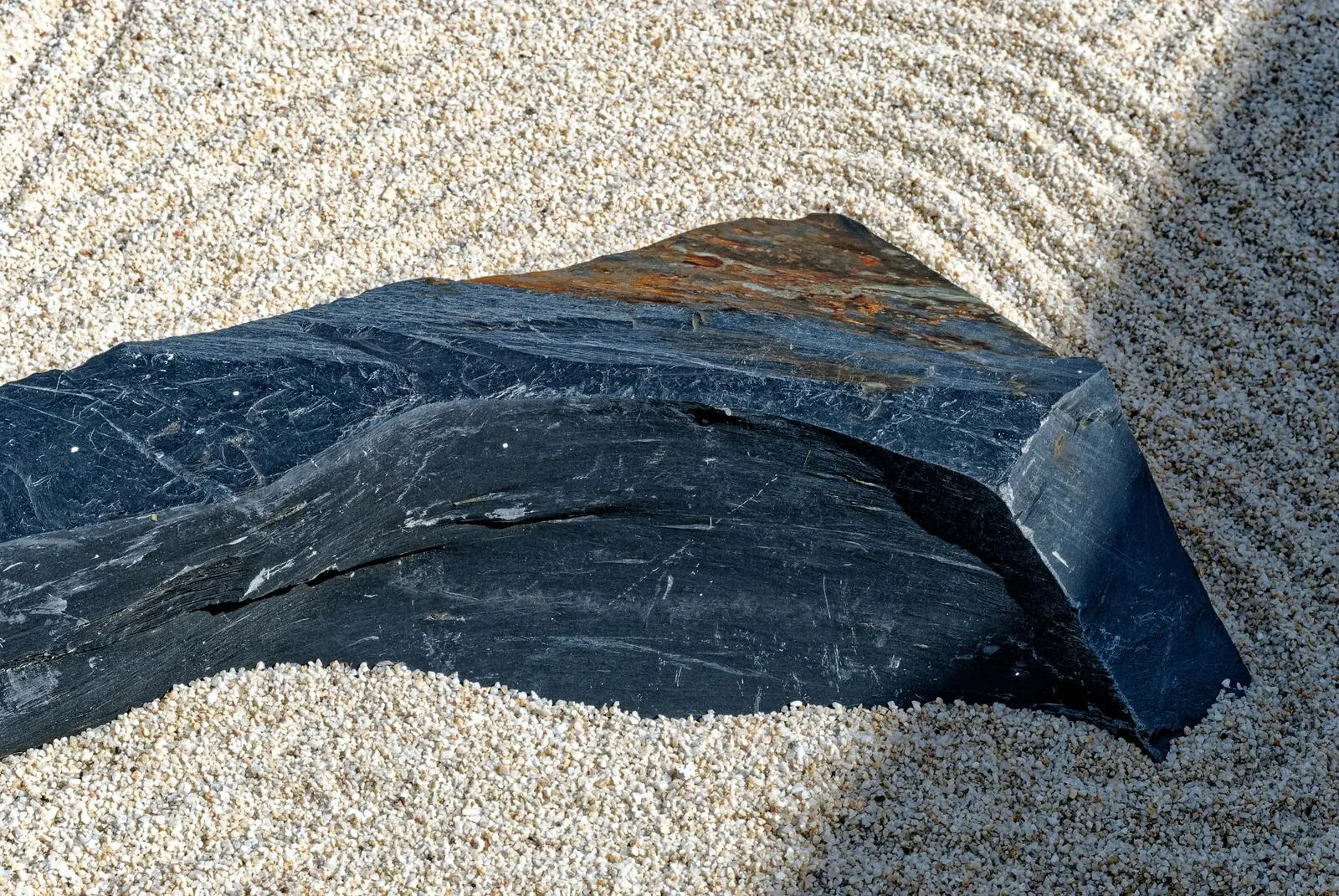
In a dry garden, raked gravel often suggests water — ripples around islands, a stream, the open sea. Stones might be mountains, islands or animals; moss can read as forest. None of this is fixed. The garden gives you just enough to imagine the rest.
A dry garden is not something you walk through. It is something you complete.
How to look
Sit down. Let your eyes move slowly from one group of stones to the next, then to the low earthen wall behind, then to the trees beyond it. Notice how the edges of the gravel are maintained, how the rake lines change around each stone. Visit early, when the light is low and the veranda is quiet, and give it at least fifteen minutes — one for every stone.