Growing Buildings: Japan's Green Facades
Rooftop gardens, planted terraces and living walls are changing the look of Japanese cities.
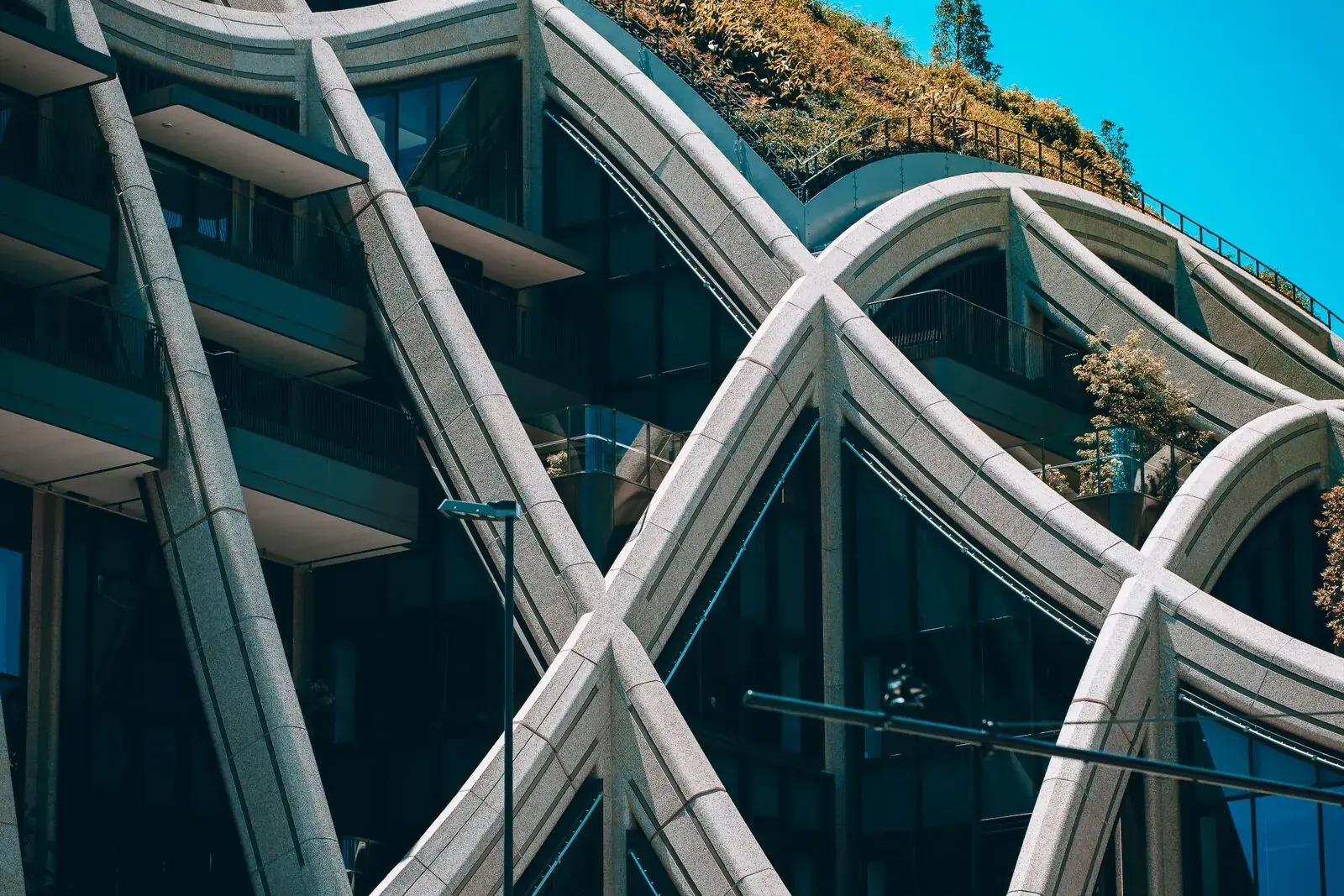
Look up in Tokyo and you will increasingly find trees where you might expect antennae. Department store roofs host gardens, office towers step back in planted terraces, and shopping complexes are wrapped in climbing greenery.
Part of the motivation is climate. Dense cities absorb and trap heat, and planted surfaces can help to cool buildings and their surroundings. Tokyo has introduced rules encouraging or requiring greening on many larger new developments, and private developers increasingly treat greenery as part of a building's identity.
A landmark in Fukuoka
One of the most famous examples is ACROS Fukuoka, completed in 1995 and designed by Emilio Ambasz. Its southern side steps down toward a park in a series of planted terraces, so that the building reads as a green hill rising from the city. Over the years the planting has matured into something close to a forest.
The best green buildings do not wear plants. They become landscape.
Old idea, new form
Bringing nature into buildings is hardly new in Japan — think of courtyard gardens in machiya or borrowed scenery in temple gardens. What is new is the scale, and the ambition to let architecture and planting grow together over decades.